

Table of Contents
- Why Standard Laser Optics Fall Short in High-Volume Production
- Laser Optics Replacement: When and Why It Matters
- Compatible Laser Optics: What You Need to Know Before Switching
- Laser Optics Repair Versus Replacement: Making the Right Call
- Industrial Printer Spare Parts: Sourcing Reliable Alternatives
- Common Mistakes When Switching to Alternative Optics
- Conclusion
- Frequently Asked Questions
Last Updated: October 10, 2026
Why Standard Laser Optics Fall Short in High-Volume Production
Standard laser optics were designed for general-purpose applications, not the relentless demands of high-volume production environments. When your facility runs 16-hour shifts pushing thousands of prints daily, conventional optics degrade faster, require more frequent cleaning, and introduce inconsistencies that halt your workflow.
The real problem isn't the optics themselves, it's that they weren't engineered for your specific production load. Standard components assume moderate use. They lack the thermal management, precision coatings, and material durability that industrial settings demand. A lens that performs adequately at 500 prints per day becomes a bottleneck at 5,000.
This is where laser optics alternatives matter. Specialist manufacturers have developed optics specifically built for high-throughput environments. These alternatives address the gaps standard optics leave open: better heat dissipation, enhanced durability under constant use, and coatings that resist contamination from production dust and vapour. The difference isn't marginal. It's the gap between equipment that needs servicing every month and equipment that runs reliably for quarters.
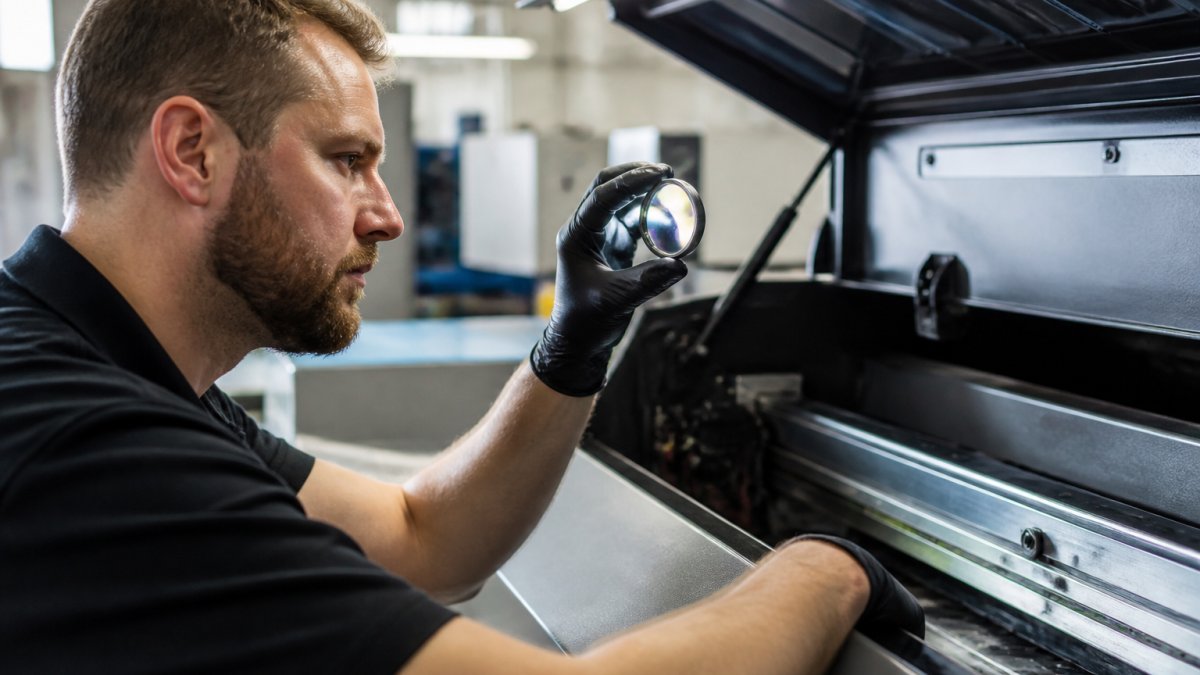
Production managers who switch to purpose-built laser optics alternatives often report fewer unplanned downtime events and longer intervals between maintenance cycles. That translates directly to throughput gains and cost savings.
Laser Optics Replacement: When and Why It Matters
Knowing when to replace laser optics is critical. Wait too long and you risk catastrophic equipment failure. Replace too early and you've wasted money on components with usable life remaining.
Replace your laser optics when you notice any of these signs: beam quality degradation visible in print output, increased cleaning frequency to maintain print consistency, thermal warnings from your equipment, visible coating damage or discolouration on lens surfaces, or performance metrics that no longer meet your specifications. These aren't suggestions, they're signals that your optics have reached their functional limit.
Why timing matters: degraded optics don't fail suddenly. They degrade gradually, introducing subtle inconsistencies into your output. Your prints become slightly less sharp, colours shift marginally, or registration drifts. Customers notice. Your reject rate climbs. By the time the equipment throws an error, you've already lost production quality and time.
The cost of delay extends beyond the optics themselves. Operating with compromised optics forces your equipment to work harder, stressing other components and accelerating their wear. A £300 optics replacement becomes a £2,000 repair bill when the thermal stress damages your laser tube or mirrors.
Compatible laser optics alternatives let you replace only what's failed, not the entire optical assembly. This targeted approach keeps costs proportional to actual need.
Compatible Laser Optics: What You Need to Know Before Switching
Compatibility isn't optional, it's foundational. Installing incompatible optics doesn't just fail; it can damage your equipment.
Verifying Compatibility with Your Equipment
Before sourcing alternatives, you need three pieces of information: your equipment's exact model and serial number, the specifications of your current optics, and your optical path design. Equipment manufacturers encode these details in your manual and on the equipment itself.
Start by identifying your laser type (CO2, fibre, or solid-state), your lens diameter and focal length, and your mounting configuration. These specifications determine which alternatives will actually fit and function. A lens with the correct diameter but wrong focal length will focus incorrectly, producing blurred output or damaging your equipment.
Many production managers skip this step and order "compatible" optics based on part numbers alone. That approach fails because part numbers don't guarantee physical or optical compatibility. Two lenses with identical part numbers from different manufacturers may have different coatings, different thermal properties, or different mechanical tolerances.
The safest approach: contact your equipment manufacturer or a specialist supplier who can verify compatibility against your specific configuration. Provide your equipment model, current optics specifications, and intended application. A qualified supplier will confirm whether an alternative will work or flag potential issues before you order.
Performance Trade-offs Between Standard and Alternative Optics
Switching to laser optics alternatives always involves trade-offs. Understanding them prevents disappointment.
Standard optics prioritise cost and broad compatibility. Alternative optics prioritise performance for specific use cases. A high-performance replacement lens might cost 40% more than the standard equivalent but deliver 30% longer service life and superior beam quality. That's a worthwhile trade-off for high-volume operations. For occasional use, it's not.
Some alternatives sacrifice thermal stability for cost savings. Others prioritise thermal performance but introduce slight optical aberrations acceptable in industrial applications but not in precision work. The best choice depends on what your production actually demands.
Coating differences matter significantly. Standard optics often use basic anti-reflective coatings. Specialist alternatives use multi-layer coatings that resist contamination, handle higher power densities, or provide better performance at specific wavelengths. These coatings cost more upfront but reduce cleaning frequency and extend optics life.
Laser Optics Repair Versus Replacement: Making the Right Call
Not every degraded lens needs replacement. Some can be repaired cost-effectively. Others should be replaced outright.
Repair makes sense when damage is localised and the optics are relatively new. A lens with a small scratch on the coating, minor dust contamination, or slight misalignment can often be restored. Professional cleaning and realignment might cost £150-400 and restore 90% of original performance.
Replacement is the right call when damage is extensive, the optics are near end-of-life anyway, or repair costs approach 60% of replacement cost. A lens with internal fractures, large coating damage, or thermal stress damage cannot be safely repaired. Attempting repair creates risk: a partially damaged lens can fail suddenly under load, potentially damaging downstream optics or the laser tube itself.
The decision also depends on your equipment's age. Repairing optics on a five-year-old printer makes sense. Repairing optics on a twelve-year-old system is often a false economy; you're investing in equipment nearing the end of its useful life. Replacement is more cost-effective.
Industrial Printer Spare Parts: Sourcing Reliable Alternatives
Finding reliable spare parts for industrial printers requires knowing where to look and what to verify.
Authorised distributors are often the safest option but also the most expensive. They guarantee compatibility and provide warranty coverage. For budget-conscious operations, specialist independent suppliers can offer genuine or equivalent-quality parts at lower cost, provided you verify their credentials and their stock thoroughly.
When sourcing industrial printer spare parts, demand documentation: part number compatibility lists, optical specifications, thermal ratings, and coating information. Reputable suppliers provide this freely. Suppliers who cannot or won't are red flags.
Lead times matter in production environments. Standard parts might take 5-10 working days. Specialist alternatives might be in stock for immediate dispatch. Understanding your supplier's logistics before you need parts prevents crisis purchasing at inflated prices.
According to manufacturing industry guidance on spare parts management, maintaining relationships with multiple qualified suppliers reduces supply chain risk. Don't rely on a single source, especially for critical components like laser optics.
Common Mistakes When Switching to Alternative Optics
Most production managers make at least one avoidable mistake when sourcing laser optics alternatives.
The first mistake is assuming all optics with the same diameter and focal length are interchangeable. They're not. Coating type, material composition, and mechanical tolerances vary. A lens from Supplier A with identical specifications to Supplier B's lens may perform differently in your equipment.
The second mistake is prioritising cost over compatibility. Saving £100 on optics that don't quite fit your optical path is a false saving. Installation problems, performance degradation, or equipment damage will cost far more.
The third mistake is neglecting thermal characteristics. A lens that handles standard power levels may thermally distort under high-power applications. This introduces beam aberrations that degrade output quality without triggering equipment errors. You don't realise the problem until your print quality suffers.
The fourth mistake is sourcing parts without verifying supplier expertise. Not all spare parts suppliers understand industrial laser systems. A supplier selling general optics might not grasp the specific demands of your application. Specialist suppliers who focus exclusively on industrial printing equipment understand these nuances.
The fifth mistake is failing to document what you're replacing. Keep records of original part numbers, specifications, installation dates, and performance metrics. This documentation helps you identify patterns, plan maintenance proactively, and troubleshoot problems faster.
British Standards Institution guidance on equipment maintenance emphasises that proper documentation and supplier relationships are foundational to reliable operations. Following this practice prevents most sourcing errors.
Conclusion
Standard laser optics serve general purposes adequately. High-volume production demands more. Laser optics alternatives engineered for industrial environments deliver better durability, longer service intervals, and more consistent output. The cost premium is justified by reduced downtime and improved print quality.
The key is choosing the right alternative for your specific equipment and application. Verify compatibility carefully, understand performance trade-offs, and source from suppliers who demonstrate genuine expertise in industrial printing systems.
Laserprints specialises in resolving operational downtime for UK businesses reliant on professional-grade laser, DTF, and UV print engines. We provide expert repair, maintenance, and high-quality spare parts to manufacturers and print service providers, ensuring their critical printing equipment operates at peak performance. Our dedicated team delivers precise care and rapid support, enabling businesses to achieve consistent, high-quality print results and maintain uninterrupted production schedules. We are the trusted partner for companies seeking to maximise the efficiency and longevity of their industrial printing assets.
Frequently Asked Questions
What are the main alternatives to standard laser optics?
Alternatives include compatible third-party optics designed to match your equipment's specifications, refurbished optics from certified suppliers, and upgraded optics that offer improved performance characteristics. Each option carries different trade-offs in cost, longevity, and print quality. The best choice depends on your production volume, budget constraints, and whether you prioritise minimising downtime or maximising precision. Verify any alternative meets your printer's technical requirements before purchasing.
How do I know if compatible laser optics will work with my printer?
Check your equipment's documentation for the exact optical specification, including focal length, lens diameter, and coating type. Compatible laser optics must match these specifications precisely. Contact your equipment manufacturer or a specialist supplier with your machine's model number and serial details. Mismatched optics can damage your printer or produce substandard results, so verification is essential before installation.
Should I repair or replace damaged laser optics?
Minor contamination can sometimes be cleaned, but internal damage, scratches, or coating degradation typically requires replacement. If your optics are still within warranty or under a maintenance contract, repair may be covered at no cost. For out-of-warranty equipment, replacement is often a more practical option than attempting repairs, especially if downtime is affecting production.
How long does it take to source industrial printer spare parts?
Lead times vary significantly depending on whether parts are in stock, your location, and the supplier. Standard optics from major manufacturers typically arrive within 5-10 working days. Specialist alternatives or refurbished parts may take 2-3 weeks. To minimise downtime, consider maintaining a small inventory of critical spare parts or establishing a relationship with a supplier offering rapid turnaround or next-day delivery options where available.
When your laser optics fail, downtime costs mount quickly. Laserprints delivers compatible alternatives, expert compatibility verification, and rapid parts dispatch to minimise disruption to your production schedule. Shop now →