

Table of Contents
- Why Fibre Laser Maintenance Matters for Production
- How Regular Maintenance Prevents Costly Downtime
- Creating a Fibre Laser Preventive Maintenance Checklist
- Understanding Fibre Laser Service Intervals
- Common Fibre Laser Repair Issues and How Prevention Helps
- Extending Equipment Lifespan Through Consistent Care
- Building Your Maintenance Strategy
- Frequently Asked Questions
Last Updated: October 1, 2026
Why Fibre Laser Maintenance Matters for Production
Fibre laser maintenance isn't optional upkeep, it's the difference between consistent output and unexpected shutdowns that cost you money and credibility. When a production manager's laser goes down mid-shift, the impact ripples through the entire schedule. Orders slip. Customers get frustrated. Margins shrink.
The reality is straightforward: machines that receive regular care run longer, perform more reliably, and deliver predictable results. Machines that don't break down in ways that are expensive to fix and difficult to predict. Many production facilities discover this lesson the hard way, only after a critical failure forces them to call for emergency repairs.
At Laserprints, we work with manufacturers across the UK to resolve operational downtime. The difference in operational stability is significant. A fibre laser that's properly maintained doesn't just last longer, it maintains print quality, reduces scrap rates, and keeps your team focused on production rather than troubleshooting.
This guide covers the practical reasons why fibre laser maintenance matters, how it prevents costly downtime, and how to build a maintenance strategy that actually works for your operation.
How Regular Maintenance Prevents Costly Downtime
Downtime is expensive. A laser that fails during peak production doesn't just sit idle, it creates a cascade of problems. Orders miss deadlines. Staff stand around waiting for repairs. Backup equipment may not be available. Emergency service calls cost more than scheduled maintenance ever would.
Regular maintenance intercepts problems before they become failures. When you inspect components on a schedule, you catch wear before it becomes a break. You replace consumables before they fail spectacularly. You identify drift in performance before it affects your output quality.
The cost-benefit calculation is straightforward. A maintenance engineer checking your equipment on a regular schedule costs less per hour than the labour you lose when production stops. It costs far less than the revenue impact of missed orders or the damage to customer relationships when delivery dates slip.
Think about what happens when a printhead becomes partially blocked. If caught early through routine inspection, the issue is manageable, a cleaning service or a straightforward replacement. If ignored, that blockage worsens until the machine produces unusable output, forcing you to stop production entirely and call for emergency repairs. That's downtime measured in days, not hours.
Many manufacturers find that moving from emergency-only repairs to scheduled maintenance actually reduces their total annual spend on service. The prevention cost is lower than the crisis cost.
Creating a Fibre Laser Preventive Maintenance Checklist
A fibre laser preventive maintenance checklist gives your team a clear, repeatable process for keeping equipment in good condition. Without one, maintenance becomes inconsistent, some checks get done, others get skipped, and problems develop in the gaps.
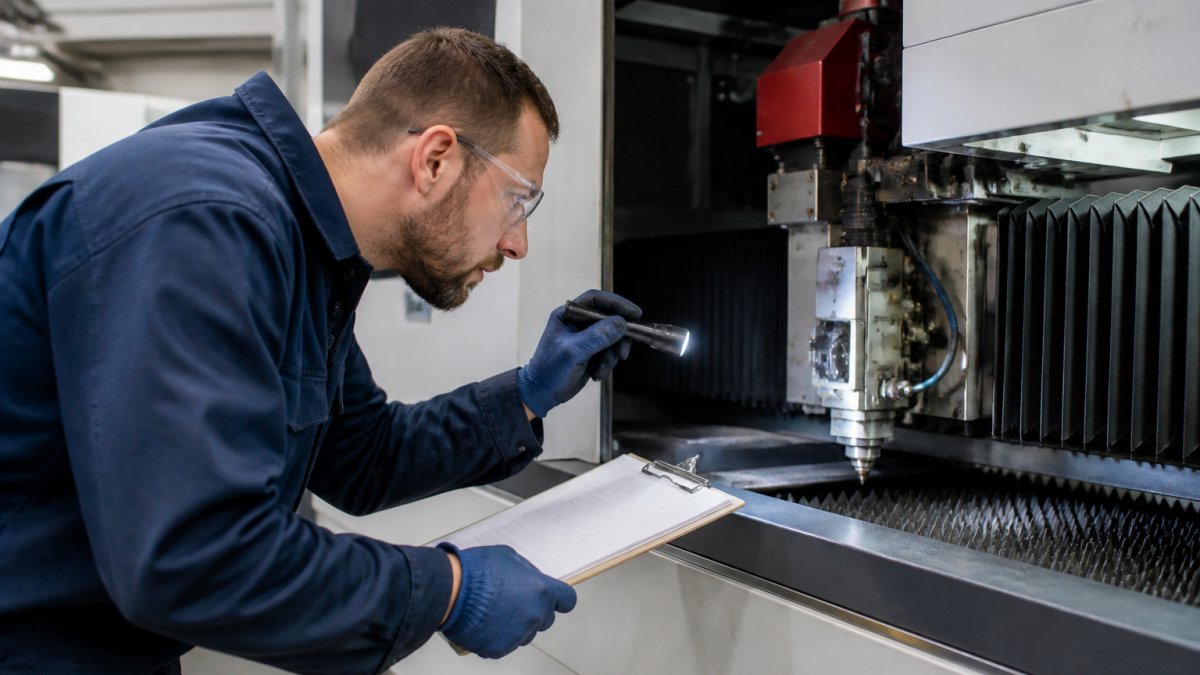
Your checklist should cover the key areas that determine machine health: optical path cleanliness, cooling system function, electrical connections, and consumable wear. The specific items depend on your equipment, but the principle is the same, regular, documented checks that catch problems early.
A practical approach is to separate maintenance into daily, weekly, and monthly tasks. Daily checks might include visual inspection for obvious damage or debris. Weekly checks could involve testing beam alignment and verifying cooling system operation. Monthly checks might include deeper optical inspection and checking for wear on moving parts.
Documentation matters. When you record what was checked, what you found, and what was done, you create a history that helps you spot patterns. If a particular component consistently shows wear, you know to monitor it more closely or replace it more frequently. You also have evidence of maintenance for warranty purposes and operational audits.
Remote support or on-site guidance can ensure your team knows exactly what to look for and how to document findings properly.

Understanding Fibre Laser Service Intervals
Fibre laser service interval schedules depend on how heavily you use your equipment and what the manufacturer specifies. There's no universal standard, a machine running eight hours a day has different needs than one running twenty-four hours.
Most professional-grade fibre lasers benefit from scheduled servicing every three to six months, depending on usage. Heavy production environments might need quarterly service. Lower-volume operations might stretch to six months. The key is matching the interval to your actual workload and monitoring performance between services.
Your manufacturer's documentation should specify recommended service intervals. Follow those recommendations as a starting point, then adjust based on what you observe. If you notice performance drift or increased error rates approaching the end of a service cycle, you may need more frequent service. If your equipment runs flawlessly for six months, you might be able to extend the interval slightly.
Service intervals aren't just about running through a checklist, they're about having qualified eyes on your equipment regularly. A service engineer can spot subtle changes in performance, alignment, or component wear that your team might miss. They can identify emerging issues before they become failures.
Common Fibre Laser Repair Issues and How Prevention Helps
Understanding the most common failure points helps you focus your maintenance effort where it matters most. The issues that cause most downtime are often preventable through regular care.
Optical misalignment is one of the most frequent problems. When mirrors and lenses drift out of alignment, beam quality suffers and power output drops. Catching misalignment early through regular checks lets you adjust it before output becomes unusable. Ignoring it means production stops while you wait for a technician to realign the system.
In-House Machine Repair Service →
Cooling system failures are another common issue. If coolant becomes contaminated or flow is restricted, the laser head overheats and shuts down. Regular inspection of coolant colour, flow rate, and temperature prevents this. A simple coolant change on schedule is far cheaper than replacing a damaged laser head.
Contamination in the optical path, dust, debris, or condensation on mirrors and lenses, degrades beam quality and can damage components if left unchecked. Regular cleaning prevents this. Many production problems that look like laser failures are actually just dirty optics.
Electrical connection issues develop slowly. Corrosion, loose connectors, or worn cables don't fail suddenly, they degrade performance gradually. Regular inspection catches these before they cause complete failure.
The pattern is clear: the issues that cause the most expensive downtime are often problems that regular maintenance would have prevented. Prevention isn't just about keeping equipment running, it's about avoiding the specific failures that are most disruptive to your operation.
Extending Equipment Lifespan Through Consistent Care
A fibre laser is a significant capital investment. Extending its working life by several years through proper maintenance directly impacts your return on that investment.
Consistent care reduces the rate at which components wear. Optical elements that are kept clean degrade more slowly. Cooling systems that are regularly serviced maintain efficiency longer. Electrical connections that are inspected and maintained resist corrosion. The cumulative effect is a machine that remains productive for significantly longer.
Many manufacturers find that well-maintained equipment delivers reliable performance for ten years or more. Equipment that's neglected often fails within half that time. The difference isn't just about maintenance cost, it's about total cost of ownership.
When you're planning equipment replacement, consistent maintenance history affects resale value too. A laser with documented regular service is worth more to a buyer than one with a sketchy maintenance record. If you ever decide to upgrade or sell equipment, that history matters.
Beyond the financial argument, there's the operational benefit. Equipment you can rely on lets you make long-term production commitments. You can schedule work confidently, knowing your machines will be available. That reliability translates to customer satisfaction and business growth.
Building Your Maintenance Strategy
A maintenance strategy isn't complicated, but it does require intentional planning. Start by understanding what equipment you have, what the manufacturer recommends, and what your actual usage looks like.
Document your current situation. How often does each machine run? What problems have you experienced? How much downtime have those problems caused? This baseline helps you understand whether you're dealing with normal wear or emerging issues.
Next, establish your maintenance schedule. Use manufacturer recommendations as a starting point. Decide who will perform maintenance, your own team, an external service provider, or a combination. For complex equipment like fibre lasers, having qualified external support available is important. Your team might handle routine checks, but service and repairs benefit from specialist expertise.
Create your maintenance checklist based on your equipment and usage. Make it specific enough to be useful, but simple enough that your team will actually follow it. Unclear checklists get skipped. Clear, practical checklists get done.
Document everything. Record what was checked, what you found, and what was done. This creates a maintenance history that helps you spot patterns and provides evidence that you're taking care of equipment properly.
Finally, build relationships with service providers before you need emergency repairs. When you work with Laserprints, you're building a partnership with people who understand your equipment and your operation.
| Maintenance Task | Frequency | Impact |
|---|---|---|
| Visual inspection for damage | Daily | Catches obvious problems early |
| Beam alignment check | Weekly | Prevents output quality drift |
| Cooling system verification | Weekly | Prevents overheating failures |
| Optical path cleaning | Monthly | Maintains beam quality |
| Component wear assessment | Monthly | Identifies parts needing replacement |
| Full system service | Quarterly to semi-annually | Catches hidden issues before failure |
Frequently Asked Questions
How often should a fibre laser be serviced?
Service intervals depend on usage volume and operating conditions. Establishing a consistent schedule prevents unexpected failures and keeps your equipment performing reliably.
What are the most common fibre laser repair issues, and can maintenance prevent them?
Common fibre laser repair issues include lens contamination, cooling system failures, and electrical component degradation. Regular maintenance catches these problems before they halt production. Preventative cleaning of optics, monitoring cooling fluid levels, and inspecting electrical connections reduce emergency breakdowns significantly. Many businesses find that addressing these issues during scheduled maintenance costs far less than emergency call-outs and lost production time.
Does regular maintenance really extend equipment lifespan?
Yes. Consistent fibre laser maintenance removes contaminants, reduces component stress, and prevents cascading failures. The investment in scheduled maintenance pays for itself through extended operational life, fewer replacement parts, and avoided production losses. Businesses that maintain equipment proactively report significantly better long-term cost outcomes than those relying on reactive repairs.
What should be included in a fibre laser service interval schedule?
A comprehensive fibre laser service interval should include lens and mirror cleaning, cooling system checks, electrical connection inspection, and calibration testing. Documentation of each service interval creates a maintenance history that helps predict future needs and supports warranty claims. Regular intervals keep your equipment within optimal performance specifications.